How Digitalization Is Revolutionizing the Financial World
Bitcoin and digitalization as a whole have fundamentally transformed the financial world in recent years, opening up possibilities that seemed unthinkable just a decade ago. Terms like Bitcoin and tokenization are no longer just jargon for tech enthusiasts – they are part of everyday conversation in business, the media and even in private life.
Bitcoin, as the first and best-known cryptocurrency, paved the way for decentralized finance, while tokenization is an innovative method for bringing real assets into the digital world.
Both concepts are based on blockchain technology, but they share only superficial similarities – in reality, they represent two different worlds with their own strengths, risks and areas of application.
In this in-depth article, we take a detailed look at Bitcoin and tokenization. We explain the basics of both systems, compare them in terms of security, utility and future potential, and show why tokenization is the more attractive option for many investors.
Whether you are new to the world of cryptocurrencies or want to diversify your portfolio: here you will find well-founded information to help you make informed decisions.
What Is Bitcoin? A Detailed Introduction to the First Cryptocurrency
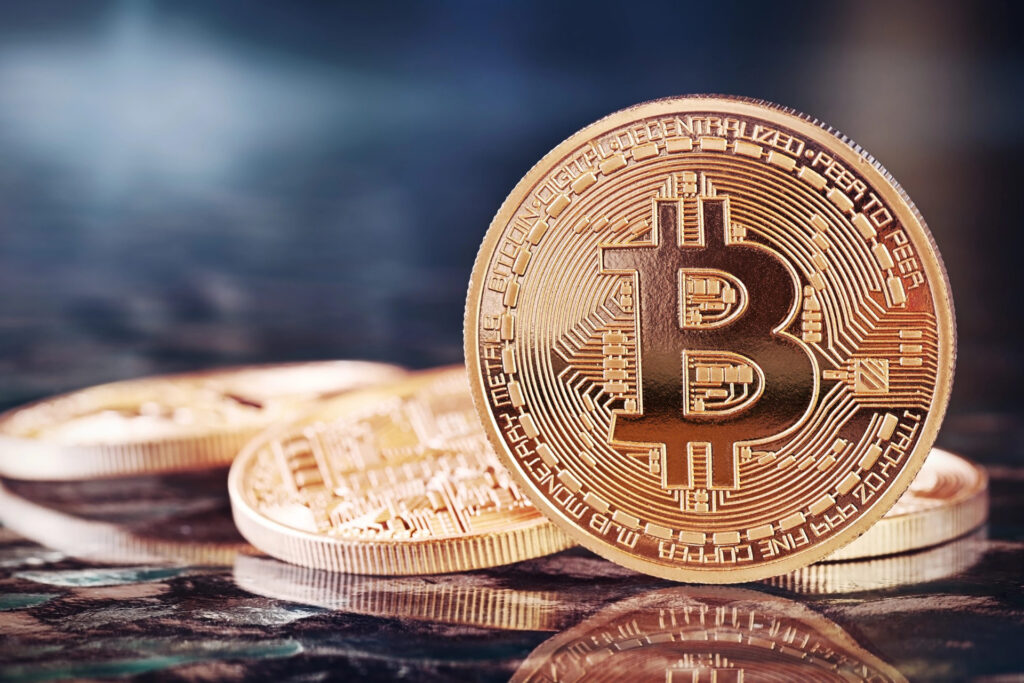
Bitcoin is considered the forefather of all cryptocurrencies and marked the beginning of a new era in the financial world in 2009. Developed by the pseudonymous creator Satoshi Nakamoto as a direct response to the global financial crisis of 2008, Bitcoin was meant to create a decentralized payment system that works independently of traditional institutions such as banks, governments or central banks.
The core goal was to establish a system in which transactions take place peer-to-peer (from person to person), without third parties intervening or collecting fees.
Technically, Bitcoin is based on blockchain technology, a distributed, public database that stores all transactions in blocks. Each block is cryptographically linked to the previous one, which makes manipulation virtually impossible. Users can verify every transaction without sensitive personal data such as names or addresses being disclosed – pseudonymous addresses are used instead. This protects privacy but also brings challenges, as it can be difficult to trace transactions.
A striking feature of Bitcoin is its limited supply: a maximum of 21 million bitcoins will ever exist, as defined in the code. This creates scarcity and makes Bitcoin a potential “store of value”, comparable to gold. Its value is determined solely by supply and demand on the market, which leads to extreme price swings – the price can rise or fall by dozens of percent within hours.
For beginners: think of Bitcoin as digital money that you store in a wallet and can send anywhere in the world, without currency conversion or bank opening hours. The advantages are independence and fast international transfers; the disadvantages are volatility and the high energy consumption of mining (the process of creating new bitcoins and validating transactions).
Overall, Bitcoin has proven that decentralized finance is feasible, and it serves as many people’s entry point into the crypto world.
What Is Tokenization? A Comprehensive Explanation of Digitizing Real Assets
Tokenization is a relatively new concept that has gained a lot of importance in recent years and takes blockchain technology to a new level. At its core, it is about converting real, physical or economic assets into digital tokens that can be stored and traded on a blockchain. Unlike Bitcoin, which is a purely digital currency without intrinsic value, each token represents a clearly defined share of a real asset.
The process works like this: an asset – whether a property, a work of art, a stake in a company, commodities or even intellectual property – is valued and divided into smaller digital units (tokens).
These tokens are then stored on a blockchain, which makes them secure, transparent and tradable worldwide.
A classic example is the tokenization of real estate: a vacation home in Florida could theoretically be divided into 1,000 tokens, with each token representing 0.1% of its value. Investors can buy small shares without having to purchase the entire property, and benefit from rental income or appreciation.
Platforms such as DigiHap Group Inc. make this process accessible and secure by offering digital tokens for real estate projects.
The advantages of tokenization include increased liquidity (illiquid assets such as works of art become tradable), lower entry barriers (small investments are possible) and global reach. Risks include regulatory uncertainty and technical dependence on the blockchain.
Tokenization builds a bridge between traditional investments and modern technology, making it a game changer for the financial market.
Bitcoin and Tokenization Compared: Goals, Functions and Key Differences
Although both are based on the blockchain, Bitcoin and tokenization differ fundamentally in their goals and functions.
Bitcoin was primarily designed as an alternative means of payment: it enables fast, cross-border transactions without intermediaries, with a value that is purely market-based. There is no underlying physical asset – the price depends on speculation, demand and global events, which leads to high volatility.
Tokenization, on the other hand, aims to digitize real assets: each token is linked to a specific asset, such as a property or a company. Its value is therefore more stable, as it depends on real market developments and not just on hype.
Another difference lies in the application: Bitcoin is suited to payments and speculation, tokenization to diversification and long-term investments.
The Real Value Behind Tokenization: Why Substance and Stability Matter
The decisive advantage of tokenization lies in its link to real assets. Unlike Bitcoin, which exists purely digitally and derives its value from trust, every token is backed by a tangible asset.
Let’s take the example of the property in Florida again: it is professionally valued, tokenized and divided into shares. As a token holder, you are a proportional owner and receive proportional income such as rent or sale proceeds.
This substance reduces risk: while Bitcoin prices can crash because of news or speculation, tokenized assets follow slower, real-economy trends. Platforms like DigiHap Group Inc. ensure transparency through audits and contracts. Tokenization enables fractional ownership, diversification and low entry costs, which democratizes traditional investing.
Security in Focus: The Blockchain as a Common Basis and Its Advantages
Security is at the heart of both systems, thanks to the blockchain. Both use a decentralized, encrypted data structure that stores transactions in immutable blocks.
With Bitcoin, it protects against counterfeit payments. With tokenization, it protects against unauthorized changes of ownership.
Tokenization goes further, however: it often integrates additional security layers such as smart contracts, which automatically fulfill conditions. Risks such as hacking exist for both, but decentralized networks minimize them. Both are robust, but tokenization benefits from being backed by real assets.
Transparency and Traceability: Benefits for Investors and Users
As mentioned above, blockchain transparency has the advantage that every action is publicly visible and cannot be changed. With Bitcoin, you can see transaction paths, but anonymity can encourage misuse.
Tokenization links tokens to real identities and rights, often through KYC (Know Your Customer) processes. That builds trust! Investors know exactly what they own. It surpasses Bitcoin through clear asset allocation and legal traceability.
Returns and Risk Compared: Speculation Versus Long-Term Stability
Bitcoin returns are based on price gains – potentially high, but volatile and dependent on market psychology.
Tokenization can enable ongoing income (e.g. distributions) and appreciation, but neither is guaranteed.
Example: Bitcoin could of course gain 100% within months, but it could also lose 100% within a few months.
Tokenized real estate, by contrast, grows steadily with the market. That makes tokenization more sustainable and ideally suited to innovative investors who want to invest their money profitably and more securely.
Regulation and Legal Certainty: The Legal Framework and Its Implications
In short: Bitcoin is decentralized and often unregulated, which offers freedom but also uncertainty (e.g. taxes, bans).
Tokenization, on the other hand, is subject to strict rules, because security tokens are considered digital securities and are subject to securities law – in the US, for example, the rules of the SEC.
Platforms like DigiHap Group Inc. offer legally reviewed models. With your investment in tokens you therefore get legal certainty, in contrast to Bitcoin’s Wild West character.
Who Is Each Model Suited For? Target Groups and Use Cases
+ Bitcoin suits risk-tolerant speculators, tech fans and those looking for quick trades.
+ Tokenization is suited to long-term investors who want stability and real income – ideal for beginners and those looking to diversify.
Examples: Bitcoin for day trading, for instance; tokenization for building retirement savings through real estate, for instance.
Outlook: Where the Journey Is Heading and What Investors Can Expect
Bitcoin laid the foundation, but tokenization is the next step:
experts expect a large share of real assets to be tokenized in the coming years. Trends such as DeFi (decentralized finance) and NFTs (non-fungible tokens) reinforce this.
What this means for you: global markets are becoming more efficient, with opportunities for everyone. So getting involved early pays off!
Conclusion: Substance beats speculation – the more sustainable choice for modern investors
Bitcoin revolutionized finance through decentralization, but tokenization connects the digital with the real for more transparency and stability. With DigiHap Group Inc. you invest in tangible projects.